Monday, November 12, 2018

Thankful For Our Teachers

As we approach the holidays here at The Academy of Powell Place we realize how we’re so truly blessed by the teachers and staff that help run our center! We have amazing and EMPOWERING employees who truly care not only for the children and families that walk through our halls but for each other. We couldn’t be who we are without them, we’re so thankful to have them here! Check out a few of our superstars in their element today! 


Monday, November 5, 2018

12 ways to volunteer your time and give back to the community

Give Back to Your Community

Americans have a great capacity to accept and face challenges head-on. In 2007, as the recession began to spread across the country, a surge of people responded and began volunteering like never before. Volunteering is a win-win for all parties involved. Those who receive help are grateful for the help, and volunteers learn that helping others makes them feel better. Consider the following as ways you can start volunteering and pay your good fortune forward.

1. Offer to Help Family

In the hectic lifestyle of the 21st century, the needs of family members are often overlooked. Parents busy raising their own children may forget the plight of their own parents, assuming they are capable of taking care of themselves. Many adult children presume their parents will speak up if they need anything. This is not always the case, especially when Granddad or Grandma have been independent for years. Older people – parents, aunts and uncles, long-time family friends – are often reluctant to share their growing frailty, loneliness, or isolation with their children.
Caring for elderly parents may be necessary, so consider the needs of your own family members first. Drop by for coffee on a Saturday morning, mow the yard, or accompany elderly parents on a shopping trip. Invite them to your child’s soccer games or other family activities. Provide an inexpensive computer with access to email and Facebook (and lessons to learn the new technology), or schedule regular visits to brighten their day.

2. Volunteer at Your Local School

Educators are overworked, stressed, and disillusioned about the educational infrastructure – and they need help. Despite knowing that schools work best when the community is actively involved, too many parents and community members believe it’s someone else’s responsibility to solve the problems of education.
Children need role models and people who care about their lives and behavior. Whether you read stories to elementary school students, monitor outdoor activities, chaperone field trips, or spend a Saturday beautifying the school grounds, your efforts will be recognized and appreciated. Moreover, you can make an investment that will pay dividends in the future.
Local School Volunteer

3. Organize a Yard Sale for Charity

If your talents lie in business, administration, or marketing, consider organizing a yard sale for your community, dedicating the proceeds to a local charity. Almost every household has electronics, furniture, clothes, or equipment that can be donated because they’re no longer in use. These items have value and can be recycled to those who will use them again.

4. Visit a Senior Center

Too many nursing homes are turned into dumping grounds for older people whose families are gone or are unavailable, and many residents are desperate for conversation and connections with people outside the center. An hour or two a week can make a huge difference in the attitude and outlook of the residents, and you may learn something about life from those who have already traveled the journey before you.

5. Coach a Local Youth Team

The old saying, “Idle hands are the Devil’s workshop,” is especially true for children and teenagers. Playing sports teaches kids teamwork, responsibility, and the joy of being physically fit.
Unfortunately, many kids don’t have the opportunity to participate in sports because there aren’t enough coaches or assistants. There are openings in almost every sport in every community for compassionate teachers and volunteer coaches. While some experience is helpful, it’s not always essential for you to be a good youth league coach.

6. Tutor a Student

Students include people of all ages, not just children. Teaching literacy to adults can change their lives. Helping someone learn English can expand his or her horizons, able to further interact in the broad community.
Academic subjects are not the only ones that need tutors – introducing and teaching others about computers and the Internet is needed everywhere, especially in the senior community. Life skills, such as cooking, sewing, and home repairs, are in demand for all ages.

7. Fix and Serve Meals

Despite America’s overall prosperity, the homeless, the unemployed, and the poor often go hungry – almost 49 million Americans in 2012, according to the USDA. Volunteers are needed to prepare and serve food through local charities throughout the year. Meals on Wheels, with an army of almost 2.6 million volunteers, serves 2.5 million seniors every day, offering nutritious meals, warm smiles, and a safety check – often the only conduit to the outside world the recipient receives.
Serve Food Through Volunteering

8. Serve on a Community Board

Charities and community service organizations often compete with other businesses for the community’s attention and support. In many cases, nonprofits are at a distinct disadvantage, lacking the resources to attract, compensate, and retain top-flight executive staff and administrators. If your talents are administrative, or if you have executive or board experience, your knowledge and insights could be welcomed at not-for-profit, community-based organizations.

9. Become a Docent

Museums, art galleries, presidential libraries, aquariums, zoos, and universities frequently need trained guides to lead visitors through facilities to enhance the visitors’ experience. Docent training is usually provided, so the only qualities necessary are enthusiasm, patience, flexibility, and passion. If you enjoy being around people, volunteering at your local museum or theater could be enjoyable and enlightening.

10. Be a Good Neighbor

Before the widespread use of air conditioning, residents of a community were more likely to spend time outside getting to know one another, rather than retreating inside to escape the heat. Now it’s common for neighbors not to know one another; rather, people simply return home from work each night and head inside.
Participation in a neighborhood organization builds a sense of community and provides valuable services to those within the neighborhood. Many neighborhood associations have community watch programs, assist with neighborhood beautification and park projects, and represent the community to local government officials. Knowing your neighbors increases a sense of personal security and connection to those around you.

11. Organize a Food Co-op

Food co-ops – cooperative efforts to buy food in volume to distribute to co-op members – initially started as a way to save money on grocery purchases. Increasingly, they are vehicles that enable members to buy fresh, naturally grown foods directly from farmers and producers at below-market prices.
Co-ops are typically nonprofit organizations that rely on volunteers, and advocates claim they offer better nutrition for lower prices. Bountiful Baskets initially started with a single site in Arizona, but now has more than 100 sites in multiple states, and it continues to grow.

12. Volunteer at a Hospital

Hospital volunteers provide crucial support to hospitals, and also offer comfort and convenience to patients, families, and visitors. Volunteer opportunities include everything from manning information booths, to sitting with patients or working with children. Duties might involve helping with food service or pushing wheelchairs. Hospitals have a wide variety of volunteer needs that are suitable for all ages.
Hospital Patients Volunteer

Final Word

If you’re still on the fence about volunteering, or you’re not sure you have the time or energy necessary, consider the five-year, multi-institutional study that proved giving and being unselfish can protect your health and prolong your life. Every day that goes by without helping another is an opportunity missed. Recognize that others helped you achieve your merits, and now you have the opportunity to pay them back while paying the effort forward.
How else can you pay success back while paying it forward for future generations?

Wednesday, October 31, 2018

Happy Halloween from The Academy of Powell Place

Here are just a few pictures of the Trunk or Treat that we had this morning. We would like to say a huge THANK YOU to everyone that came and passed out candy. Thank you Chomp, Brentwood Fire Department, NGU, The Cow from Chick-fil-A, and The Brentwood Dare car.


Monday, October 29, 2018

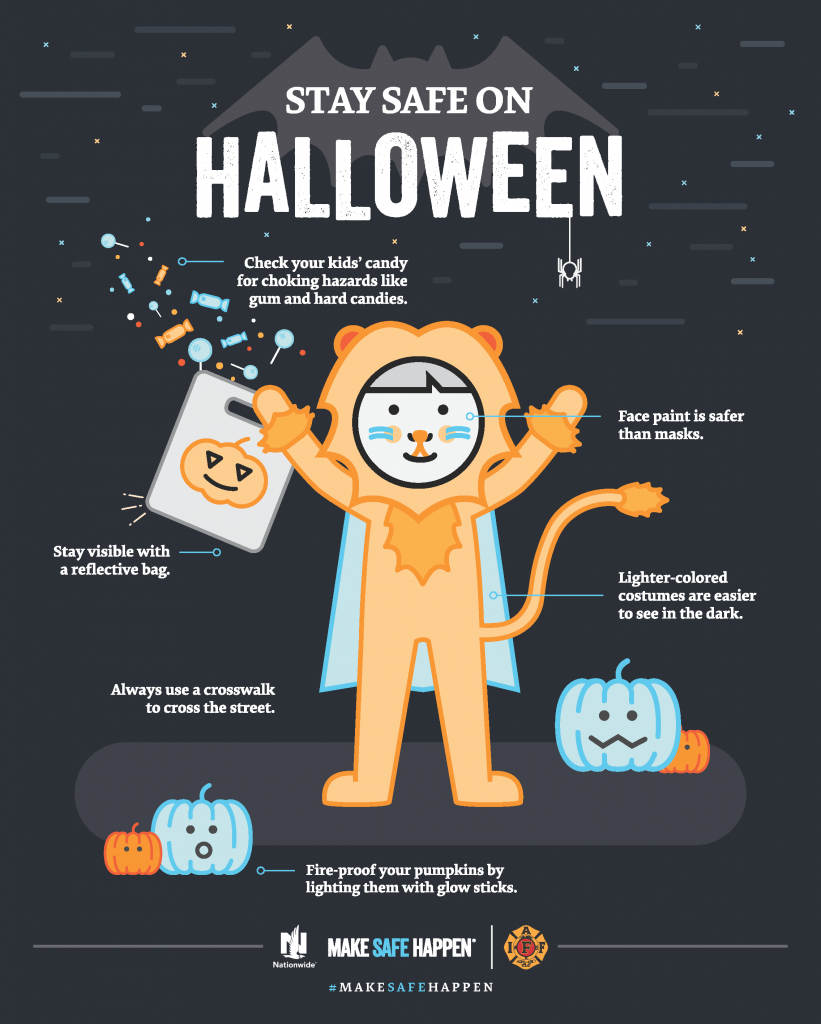
Stay safe on Halloween

Halloween is a night of fun and fright, but it does require extra caution when it comes to keeping your little monsters safe. According to Safe Kids Worldwide, “on average, twice as many child pedestrians are killed while walking on Halloween compared to any other day of the year, and more than 70 percent of accidents occur away from an intersection or crosswalk.” Follow these Halloween safety tips to help avoid common accidents and dangers.
MSH Halloween Infographic NEW

Trick-or-treating safety tips

1. Provide adult supervision

Trick or treat is safer – not to mention more fun – in groups, and adult supervision is essential. So get together with other adults and make an evening of it. Bring cellphones for quick pictures and emergencies, but leave them in your pockets to avoid getting distracted.

2. Stay on the sidewalks

The thrill of the holiday often factors into accidents as excited kids rush from door to door. Keep children on the sidewalks, and shepherd them carefully when they need to cross the road. In areas without sidewalks, walk on the far edge of the road, facing traffic.

3. Carefully check candy

Check candy for choking hazards like gum and hard candies. Throw away any candy that is not sealed with a wrapper and avoid homemade treats received from strangers.

Costume safety tips

4. Choose bright, visible costumes

When selecting a costume, opt for the bright-colored outfits and add a touch of reflective tape to the material. Stick some reflective tape on their trick-or-treat bags as well so they can be easily spotted by motorists. Lastly, don’t forget to make sure they’re equipped with a flashlight or glow stick – must-have accessories for any costume.

5. Make sure costumes are well-fitted and safe

Being visible isn’t the only safety consideration for a costume. The right fit is just as important. Here’s some advice on keeping your child’s ensemble safe and secure:
  • Prevent accidental tripping or entanglement by making sure costumes aren’t too big or long
  • Avoid masks that block vision, but if your child wears one – it should have large eye, nose and mouth openings. You can also op for makeup or face paint as an alternative
  • Costumes, wigs and accessories should contain a label indicating they are flame resistant
  • Make sure accessories such as swords, canes, or sticks are not sharp or too long

6. Makeup safety

If makeup is a part of your child’s Halloween costume plans, make sure it is non-toxic and test it on a small area first. Before your child goes to bed, make sure to remove all makeup.

Home Safety Tips

7. Jack-o-lantern safety

Young children can paint or color their pumpkins instead of carving. Or have them draw a face with markers and an adult can do the carving. Use colorful glow sticks inside your Jack-o-lanterns instead of candles to prevent burns.

8. Home decoration safety

If you’re turning your home into a haunted house, keep safety in mind: make sure steps, sidewalks, porches and paths are well-lit and free of decorations and holiday props. Keep decorations away from fireplaces and candles.

9. Take precaution against pranks and vandalism

Unfortunately, vandalism often increases during Halloween. That’s why taking these precautions is a good idea:
  • If you’re going away during Halloween, make it seem like you’re still home by turning down the volume of your answering machine and phone, covering your garage windows, and leaving your curtains in normal positions with valuables out of sight.
  • Install outdoor lighting (activated by a photocell or movement) to illuminate the area around your home during Halloween.
  • Consider purchasing a security system that directly alerts police to intruders.
  • Trim shrubs and large trees before Halloween so trespassers have fewer hiding spots.
  • Make sure your homeowners insurance policy is up-to-date.

Car and driving safety tips

10. Use extra caution while driving

Drivers need to take particular care on this chaotic night. Keep your car parked if you can, but if you have to drive through a neighborhood, take it much slower than normal. Watch for kids who may dart between cars and into the road without looking. Read our Halloween Driving Safety Guide for more useful tips.

11. Protect your car

Cars are another common target of vandalism on Halloween. Here are some ways you can help secure your car:
  • Park inside if you can on Halloween. Your garage is your best bet. If you do not have a garage you may want to consider investing in some outdoor lighting for your driveway and yard.
  • Make sure your car is locked on Halloween. Oftentimes, vandals complete their missions with ease when doors are unlocked and windows are down/cracked.
  • Consider a car alarm.
  • Hide your valuables on Halloween. Don’t give thieves any extra incentive to break into your car.
For more safety tips and information on everything from bunk beds to bicycle helmets, please check out Make Safe Happenand the Make Safe Happen app for iPhone or Android.

Friday, October 26, 2018

Music Fun

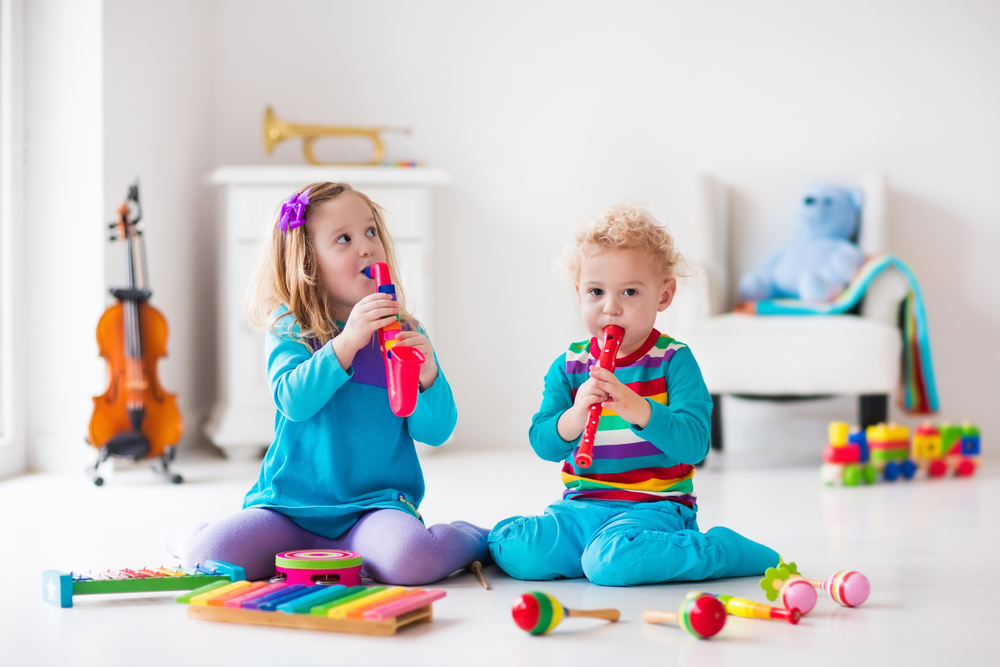
 Just a few of our children here at The Academy of Powell Place having fun with music.


Monday, October 22, 2018

The Importance of Music in Early Childhood Development

Most preschoolers love listening or singing along to music. Studies show that parents who create a rich musical environment do not only entertain their kids but also help them to develop essential music skills.
Music plays a very important part in our culture. When thinking about everyday life, music is present in a variety of social and educational activities. We listen to music on TV or when we go to the movies. Most governmental ceremonies include a component of music while we use songs to celebrate birthdays or to worship god. Given this importance of music, it is no surprise that parents use music instinctively to express joy and to engage or calm their children.

What Children Learn from Being Exposed to Music

Research undertaken by a team of researchers in the 1990s showed that the exposure to music from early childhood onwards helps children to speak more clearly, develop a larger vocabulary, and strengthen social and emotional skills. The psychologist Howard Gardner already argued in 1983 that music intelligence is as important as logical and emotional intelligence. This is because music has the ability to strengthen the connection between the body and brain to work together as a team. For instance, when dancing and moving to music, children develop better motor skills whereas singing along to a song helps them to practice their singing voice. In general, the exposure to music supports children in their development process to learn the sound of tones and words.
Copyright: FamVeld
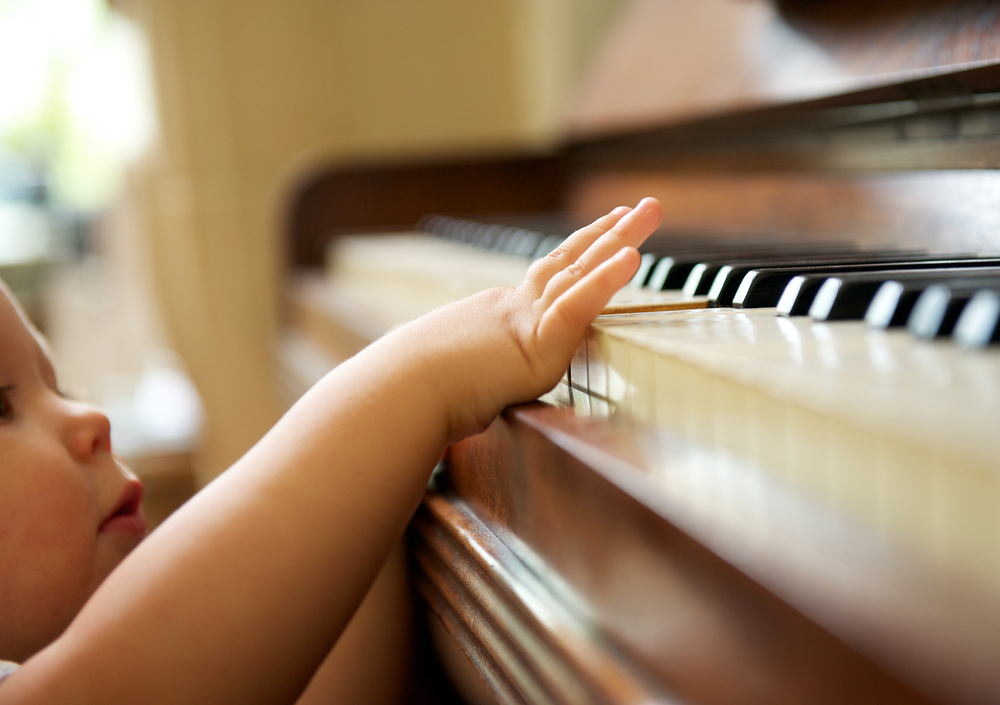
Copyright: FamVeld

Music and Early Childhood Development

Many studies have investigated the importance of music in early childhood development since the 1950s. Two facts that are widely accept are that children do not express music in the same way as adults and that the years from birth to the age of six is the most important period for a child’s musical development. This is because even the youngest toddlers receive the tones of music and unintentionally differentiate in frequency, melody, and stimuli. According to researchers, the early years of childhood are critical to learning to unscramble the tones of music and to build up a mental organization system to memorize the music. This means that, like language development, toddlers develop their musical skills through imitating and memorizing rhythms and tones of songs such as clapping to a beat and singing in tune. Without this ability, children would not be able to develop their musical skills.
However, this ability to develop musical skills is influenced by positive and negative factors. Therefore, sufficient stimulation and exposure to music and musical play are necessary to help children to turn their potential into actual musical growth. In terms of instruction, the most typical negative influence on developing musical growth is when parents are not musically orientated and do not actively expose their kids to music.
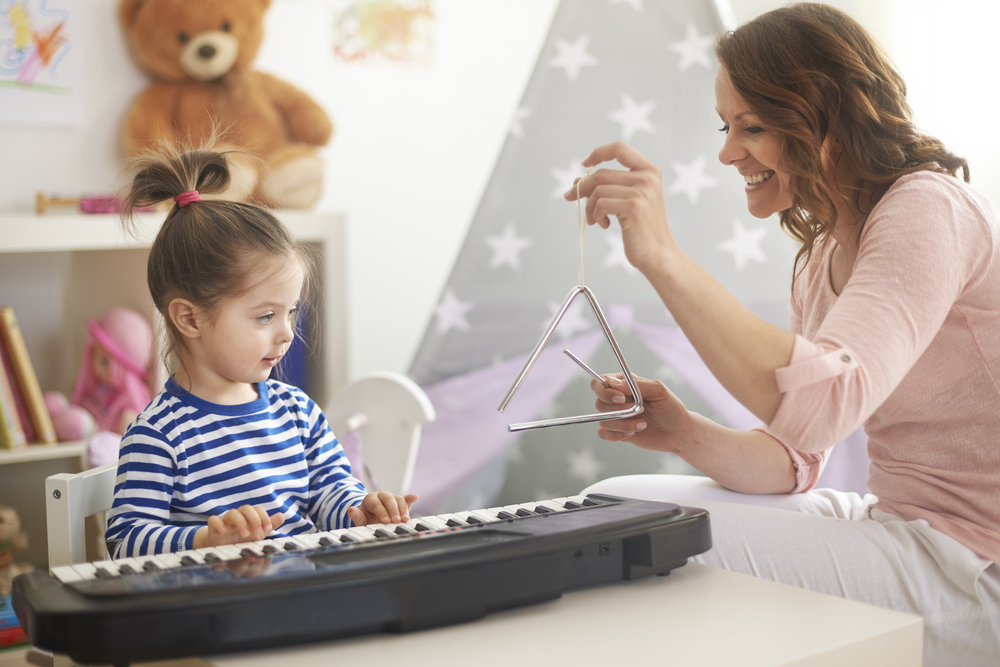
Copyright: mimagephotography

Parents’ Important Role in Musical Education

Parents play the most important role in musical education when it comes to expanding a child’s musical horizon. For many years, researchers have been pointing out that children whose families are more musically orientated are considerably more developed in their musical behavior than children who experience a less musically orientated environment. Research undertaken by Kelley and Sutton-Smith explains this situation well with clear examples: the two researchers developed case studies that followed the early childhood years of three girls whose families had different musical backgrounds. While the parents of the first girl were professional musicians, the parents of the second girl practiced music from a non-professional background. Finally, the third girls’ parents made the least musically orientated choices due to their own non-musical background. The researchers’ findings suggest that there was a major difference between the two families who exposed their girls to a varying degree of music and the family who did not engage in integrating musical education at all. They concluded that a rich musical environment at home fosters a child’s exposure to music and improves a child’s musical ability. Further research also indicates that parents develop a stronger bond with their children when they enjoy music together. This way music is not only a tool that contributes to the growth and development of a child but it also helps the family to spend quality time and have fun.
Copyright: gpointstudio

The Grand Finalé

Since there is no negative consequence to the idea to connect children with music, it is an activity that parents can enjoy with their children as often as possible. Even if the regular dose of listening to classical music is not likely to result in sudden ability improvements, it has a positive impact on a child’s rhythm, movement, and social and listening skills in the long run. Additionally, there are many short-term benefits. Listening to music can be calming, entertaining and fun for parents and children. In this sense, it does not matter whether the setting is a quiet room with a parent or a busy outside or inside music class with other children as long as the youngsters enjoy it.

Wednesday, October 17, 2018

Understanding and responding to children who bite

HomeOur Work / For Families / Articles for Families on Behavior and Development / Understanding and Responding to Children Who Bite


Biting is a typical behavior often seen in infants, toddlers, and 2-year olds. As children mature, gain self-control, and develop problem-solving skills, they usually outgrow this behavior. While not uncommon, biting can be an upsetting and potentially harmful behavior. It’s best to discourage it from the very first episode. This article will help you to understand the reasons young children bite and give you some ideas and strategies for responding appropriately.

Why do young children bite?

Some children bite instinctively, because they have not developed self-control. For example, when 3-year-old Marcus grabs a doll from his 2-year-old sister Gina, her first response is to bite him and grab the doll. She doesn’t stop to think about other ways to act or the result of her actions. But there are many other reasons why children may bite.

A child might bite to

Relieve pain from teething.
Explore cause and effect (“What happens when I bite?”).
Experience the sensation of biting.
Satisfy a need for oral-motor stimulation.
Imitate other children and adults.
Feel strong and in control.
Get attention.
Act in self-defense.
Communicate needs and desires, such as hunger or fatigue.
Communicate or express difficult feelings, such as frustration, anger, confusion, or fear (“There are too many people here and I feel cramped”).
What can families do to prevent biting?

There are a variety of things that families can do to prevent biting. It helps to

Have age-appropriate expectations for your child’s behavior based on his or her current skills and abilities.
Make sure your child’s schedule, routines, and transitions are predictable and consistent. At meal and bedtimes, try to do things in the same way and at the same times. Young children thrive when they know what will happen next.
Offer activities and materials that allow your child to relax and release tension. Some children like yoga or deep breathing. Offer playdough, foam balls, bubbles, soft music, and other stress-reducing items.
Use positive guidance strategies to help your child develop self-control. For example, offer gentle reminders, phrased in a way that tells them what behaviors are expected. “Be sure to hang up your coat on the hook.” “You can each have a bucket to use in the sandbox.” “Put a small dot of toothpaste on your brush. You won’t need much to get your teeth clean.”
Provide items to bite, such as teething rings or clean, wet, cold washcloths stored in the refrigerator. This helps children learn what they can bite safely, without hurting anyone else.
How should I respond when my child bites?

While every situation is different, here are some general guidelines for responding when a child bites.

Infants
Infants learn about the world around them by exploring it with their hands, eyes, and mouths. But infants often need help to learn what they should and shouldn’t bite.

If your infant takes an experimental bite on a mother’s breast or grandpa’s shoulder, stay calm and use clear signals to communicate that it is not okay for one person to bite another. A firm “no” or “no biting!” is an appropriate response.

Toddlers and Preschoolers
Toddlers have many strong emotions that they are just learning to manage. Toddlers may bite to express anger or frustration or because they lack the language skills needed to express their feelings.

Biting is less common in preschoolers than toddlers. When a preschooler bites, it may be due to something at home or at their child care program that is causing the child to be upset, frustrated, confused, or afraid. A preschooler may also bite to get attention or to act in self-defense.

Follow the steps below with both toddlers and preschoolers.

If you see the biting incident, move quickly to the scene and get down to children’s level. Respond to the child who did the biting. In a serious, firm tone make a strong statement: “No biting. Biting hurts. I can’t let you hurt Josie or anyone else.” Next, offer a choice: “You can help make Josie feel better, or you can sit quietly until I can talk with you.” Help the child follow through on the choice if necessary.
Respond to the child who was hurt by offering comfort through words and actions: “I’m sorry you are hurting. Let’s get some ice.” Perform first aid if necessary. The child who did the biting can help comfort the bitten child—if both parties agree. Help the child who was hurt find something to do.
Finally, talk to the child who did the biting. Maintain eye contact and speak in simple words using a calm, firm tone of voice. Try to find out what happened that led to the incident. Restate the rule, “Biting is not allowed.” Model the use of words that describe feelings: “Kim took your ball. You felt angry. You bit Kim. I can’t let you hurt Kim. No biting.” Discuss how the child can respond in similar situations in the future.
What if biting becomes a habit for my child?

If biting becomes a habit for your child and ongoing positive guidance is not effective, it is time to set up a meeting with your child’s teacher(s). Together, you can plan an approach for addressing the behavior that can be applied consistently at home and at the program. Together, you can discuss and define the behavior and find the cause behind it. Next, you and the teacher(s) can develop a plan to address the causes and help your child to replace biting with acceptable behaviors. Try the plan for several weeks, but be patient. It takes time to change behaviors that have become habits. Keep in touch with your child’s teacher(s) to share information about changes in behavior. After several weeks, evaluate the plan’s effectiveness and make changes as needed.

What strategies can I use to help my child overcome a habit of biting?

Here are some strategies for addressing a child’s biting habit.

Observe your child to learn where, when, and in what situations biting occurs. Sometimes an adult may need to stay close to the child to prevent biting.
Pay attention to signals. Stay close and step in if your child seems ready to bite.
Suggest acceptable ways to express strong feelings. Help your child learn to communicate her wants and needs (“Amy, tell your sister you were still playing with the truck”).
Use a reminder system to help your child learn to express strong feelings with appropriate words and actions (“Tell Manuel that you don’t like it when he gets that close to you”).
Reinforce positive behavior by acknowledging child’s appropriate words and actions (“You didn’t like being tickled so you used your words to ask me to stop”).
Provide opportunities for your child to make choices and feel empowered.
Be sure your behavior expectations are age-appropriate and individually appropriate for your child. Expecting a child to do something he or she is not able to do can cause children to feel stress. Stress can lead to biting.
Offer foods with a variety of textures to meet your child’s sensory needs.
Teach your child words for setting limits, such as “no,” “stop,” or “that’s mine.”
What strategies are not helpful?

These strategies should not be used to address a child’s biting habit.

Avoid labeling a child as a “biter.” Negative labels can affect how you view your child, and even affect the child’s feelings about him- or herself.
Never bite a child back to punish or show him how it feels to be bitten. Biting a child sends the message that using violence is an acceptable behavior that can be used to solve problems.
Avoid getting angry, yelling, or shaming a child.
Avoid giving too much attention to a child who bites after an incident. While this is usually negative attention, it can still reinforce the behavior and cause a child to repeat it.
Do not force a child who bit and the child who was hurt to play together.
Do not punish children who bite. Punishment does not help children to learn discipline and self-control. Instead, it makes children angry, upset, defiant, and embarrassed. It also undermines the relationship between you and your child.
For further reading

Banks, R., & S. Yi. 2007. “Dealing with Biting Behaviors in Young Children.” Clearinghouse on Early Education and Parenting. http://ceep.crc.uiuc.edu/poptopics/biting.html.

The Center on Social and Emotional Foundations for Early Learning (CSEFEL). “Responding to Your Child’s Bite.” www.vanderbilt.edu/csefel/documents/biting-parenting_tool.pdf.

Crisalli, L. 2008. “All about Biting.” Exchange 184: 61–63. http://www.ccie.com/library/5018461.pdf.

University of Maine Center for Community Inclusion and Disability Studies. “Ouch! That hurts! – Biting.” (Growing ideas tip sheet). http://umaine.edu/ccids/files/2009/12/biting120309.pdf.

Zero to Three. “Why Do Toddlers Bite? Finding the Right Response.” www.zerotothree.org/child-development/challenging-behavior/chew-on-this-resources-on-biting.html.